
Which site would you like to visit?
By clicking the retail or wholesale site button and/or using rarewineco.com you are choosing to accept our use of cookies to provide you the best possible web experience.
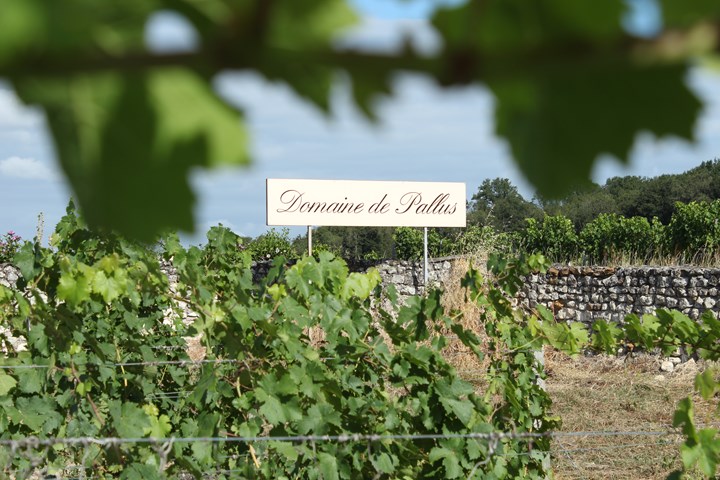
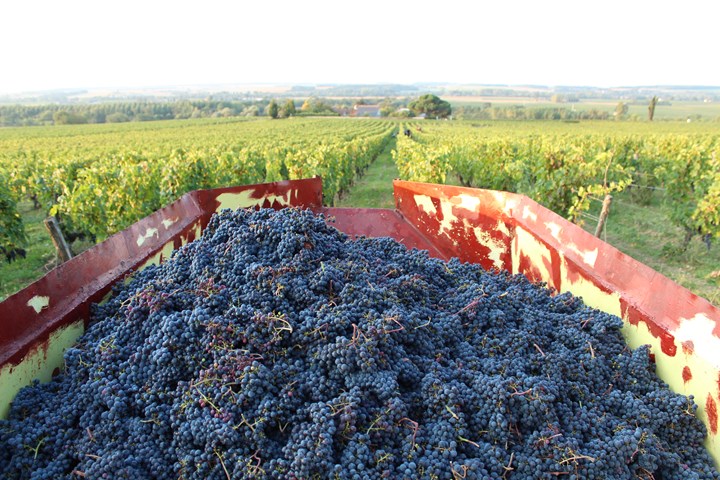
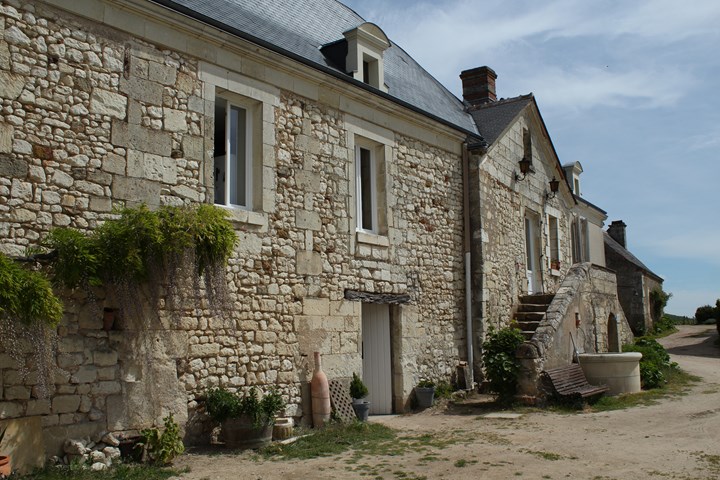
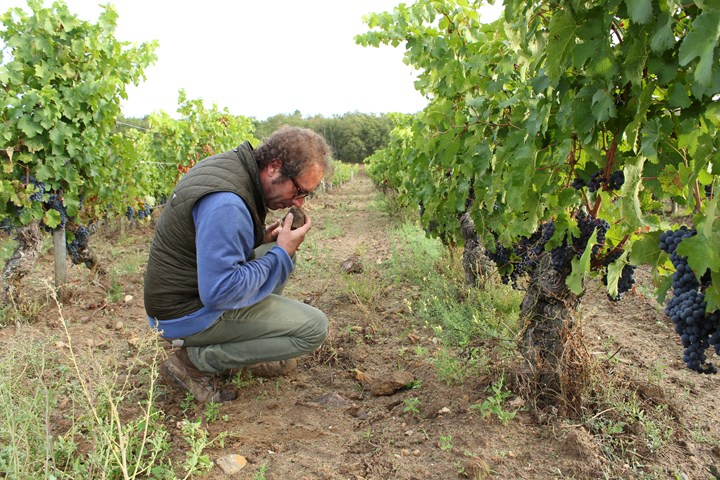
For many Bordeaux wine partisans, it's a matter of faith that if you want the best Cabernet Franc, you should go to St. Émilion or Pomerol on Bordeaux’s Right Bank.
True, the unrivaled majesty of Cheval Blanc is largely due to its two-thirds Cabernet Franc. But you'd be hard-pressed to find another major Bordeaux château willing to put Cabernet Franc in the spotlight.
It's different in the Loire valley, where for centuries, great, pure Cabernet Franc has been grown very quietly in the vicinities of Chinon, Bourgeuil and Saumur. The best wines have incredible texture and perfume, and finally the world is waking up to their compelling beauty. The "discovery" of Clos Rougeard has surely helped spike that movement, but a host of Loire Valley producers are now carrying the banner for this variety’s extraordinary potential.
One of these producers is Bertrand Sourdais, whose recent work at his family’s estate places him among the finest Cabernet Franc producers in the world today.
Bertrand grew up at Pallus but decamped for Spain after completing his enology studies in Bordeaux. While achieving stardom in Spain, Bertrand remained passionate about his native Chinon, and for its emblematic variety, Cabernet Franc. And so, it was inevitable that he would someday apply his gifts at his family’s estate.
In the early 2000s, with his father’s retirement nearing, Bertrand took up the challenge of creating something great at Pallus. In Spain, he had learned to question orthodoxy and—in returning to Pallus—he believed he could chart a new course.
His goal, ultimately, was to honor Chinon’s soils and its ancient traditions. But he knew that do so he would need to correct the flaws that persisted in the region’s traditional methods, while avoiding the mistakes typically made by modernists.
Bertrand began his quest in the autumn of 2003. From the start, he has worked in the vineyards to create harmony and balance, while striving tirelessly to find the potential of each vine. And though biodynamics have become an important tool for many Loire Valley growers, they were merely a starting point in Bertrand’s quest to set his vineyards on the right path.
Of course, he has completely rethought the winemaking process; often reverting to techniques favored by much earlier generations. He is employing extended macerations—up to an astonishing forty days—to capture the “true” personality of Chinon. Elévage is similarly long and gentle; he primarily ages his wines in used barrels from elite Burgundy estates. The wines are handled less, and bottled later, than those of almost any other domaine in Chinon.
Les Pensées de Pallus was the wine that launched Bertrand’s vision, and it remains the estate’s flagship expression today. Since the debut 2004 vintage, Les Pensées has grown in stature with each passing vintage. It is assembled from old-vine parcels surrounding the winery, with the aim to define “Chinon” in a glass. It reveals classic Loire Valley Cabernet Franc aromas and flavors, but with remarkable precision and the kind of textural depth rarely seen in the appellati
Le Clos de Pallus—The Clos is made from an enclosed section of vines planted in 1962 close to the family home. Aged in old Burgundy barrels for 18+ months, this wine aims to build on Les Pensees’ strengths to render an utterly classic expression of Chinon terroir.
Le Croix Boissée—Bertrand owns a prime parcel of this famous vineyard in Cravant. With sandy clay soils over limestone, the wine often hints at approachability, but that belies a firm structure that will reward aging.
La Rougerie—Bertrand considers this plot to be his finest. It is also produces the wine that he believes will live the longest. Half the vines were planted in 1952, with the other half planted in 2007, on soils of heavy, lime-rich clay. Bertrand retains a percentage of stems for this grand vin to further emphasize its brooding character.
Messanges—Messanges is an old Loire Valley name for Cabernet Franc. Bertrand is using this line for a Red and Rosé from his younger vines. Vinified for immediate accessibility, they are the perfect introduction to the Pallus style.
| Year | Description | Size | Notes | Avail/ Limit |
Price | |
|---|---|---|---|---|---|---|
 2019
2019
|
2019 Domaine de Pallus Chinon La Croix Boissee |
JG95 / VM94 |
5 | $79.95 | add | |
|
2019
|
2019 Domaine de Pallus Chinon La Rougerie |
VM96 / JG94 |
4 | $99.95 | add | |
|
2020
|
2020 Domaine de Pallus Chinon Le Clos de Pallus |
JS94 / VM93 |
12 | $40.95 | add | |
|
2020
|
2020 Domaine de Pallus Chinon Les Pensees |
VM91 / JG93 Read Notes |
12 | $27.95 | add | |
|
2024
|
2024 Domaine de Pallus Messanges Chinon Rouge | 12 | $19.95 | add |
New discoveries, rare bottles of extraordinary provenance, limited time offers delivered to your inbox weekly. Be the first to know.
Please Wait
Adding to Cart.
...Loading...
By clicking the retail or wholesale site button and/or using rarewineco.com you are choosing to accept our use of cookies to provide you the best possible web experience.