
Which site would you like to visit?
By clicking the retail or wholesale site button and/or using rarewineco.com you are choosing to accept our use of cookies to provide you the best possible web experience.
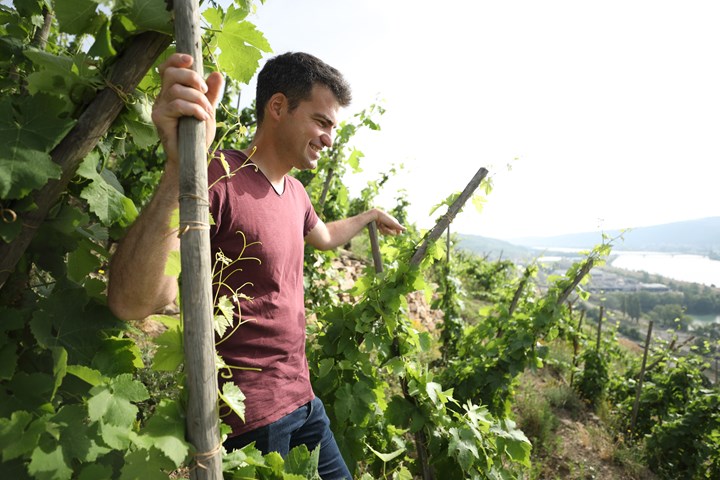
Just as Barolo’s traditional icons were re-discovered in the 2000s, the great classicists of Côte Rôtie have today grabbed the world’s imagination.
Like Barolo, the Northern Rhone largely faded from the greater wine world’s consciousness in the post-WWII era. Historic vineyards were abandoned, or only worked on weekends while their owners made their living in nearby factories, or in other agriculture. It was only in the 1980s, as Guigal’s single-vineyard wines began to gain attention, that money began to return to this fabled region.
Of course, many growers returning to full-time winemaking brought with them modern winemaking tools and techniques. And, in rejecting the often-flawed wines of their poorer elders, they also lost much of the singular identity that classical heritage could tease from their “roasted slopes.” Wines became cleaner, darker, oakier – and less uniquely Côte Rôtie.
Yet a few estates flatly rejected modernism and held true to Côte Rôtie’s historic character and techniques. So today, as collectors rediscover the glories of Marius Gentaz and his contemporaries, just a handful of estates - including Domaine Jamet and Domaine Rostaing – are making wines that evoke that earlier era.
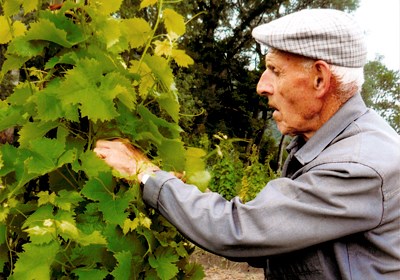
The Rostaing estate dates to 1971 when René Rostaing– a Notary by trade – began tending a few plots of family vineyards. He had the perfect role model to guide him into a career of classical winemaking: Marius Gentaz, his uncle. Over the next few years, René took advantage not only of his uncle’s mentoring, but of historically low vineyard prices, to acquire a prized half acre each in the Côte Blonde and La Landonne lieux-dits.
And when he married, he acquired a second traditional role model, his father-in-law, Albert Dervieux. Dervieux retired in 1989 and Gentaz followed three years later, giving René a further ten acres of very old vines in some of the appellation’s top sites. This treasury of vineyards launched René’s estate into the stratosphere.
The vineyard expansion also enabled René to quit his day job and to devote himself full time to winemaking. Over the next 25+ years, he crafted a sequence of masterful wines that honored the legacy of his illustrious forebearers.
In 2015, René’s son, Pierre, took the reins at an estate that boasts 20+ acres of the finest vineyards in and around Côte Rôtie. And, he shares his father’s deep reverence for Côte Rôtie’s traditions.
René Rostaing is one of Côte Rôtie’s most masterful growers.”
- Robert Parker
Always the maverick, René was never afraid to use technology if it would help him make even more authentic Côte Rôtie. So, in the late 1990s, René acquired horizontal, rotary fermentation tanks, though not for the same purpose as virtually everyone else.
While modernists—most famously in Barolo—adopted these tanks to speed fermentations and capture more color and fruit, René adopted them to mimic the long, gentle macerations of his ancestors. The process has much the same effect as the cappello sommerso employed by many of Piedmont’s staunchest traditionalists, with the tanks often making just a single rotation per day.
The Rostaings also prize mature fruit, but never to a degree of over-ripeness. For example, if you’re looking for 2003 or 2009 Northern Rhônes with no hint of sur-maturité, there are no better choices than Rostaing Côte Rôties.
Over his long career, René experimented with other “modern” techniques, but the results convinced him to reject the vast majority as antithetical to Côte Rôtie’s essence. The classical regime that the estate employs today would certainly be recognized by their ancestors. Pierre was able to experiment further through stages in Washington, California and in France. He too came away convinced of the wisdom of his forebearers.
Pierre uses up to 100% of the stems - believing they contribute to Côte Rôtie’s ineffable perfume. Macerations last from 7 to 20+ days, and the wines enjoy a long élevage in a mix of barrels and time-honored pièce for aging, so that no more than 15% of a given vintage sees new wood.
In sum, the Rostaing wines rank—in our view and the view of others—among the very best of classic Côte Rôtie. They are wines of consistency and sophistication that are true to their origins. And with Pierre Rostaing now in day-to-day control, the future for this estate has never looked brighter.
"The Rostaing touch is evident in the perfumed fruits and elegant, silky tannins."
- Andrew Jeffords on Puech Chaud
From several parcels of old vines immediately adjoining Côte Rôtie and Condrieu, the domaine produces a gorgeous Vins de Pays white and red called Les Lézardes. In Condrieu, a tiny parcel in Côte Bonnette yields some of the region’s most refined Viognier.
The estate’s reputation, however, is based solidly on its majestic Côte Rôties. These are wines of intense perfume, and the combination of delicacy and power that comes from no other Syrah. The flagship red, Ampodium (formerly known as “Classique”), is assembled from parcels throughout Côte Rôtie. It is a terrific expression of the appellation, and by itself rivals the appellation’s best.
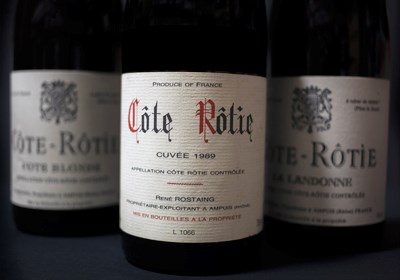
The Rostaing mystique grows further with the prized single-vineyard wines, La Landonne and Côte Blonde. These are extraordinary expressions of two very different terroirs. Landonne is dark and powerful, while Côte Blonde is lithe and explosive; yet both are imbued with the finesse for which Rostaing is famed.
Finally, with the 2013 vintage, René began to produce a separate bottling from the famed Côte Brune lieu-dit. This site was once the source of Marius Gentaz’s legendary Côte Rôtie Côte Brune but was replanted in the late 1990s because the vines had fallen into poor condition.
For over 15 years, while the vines matured, the fruit was used in the Côte Rôtie “Ampodium.” But finally, in 2013, he decided they were old enough to stand on their own. Pierre produced a second bottling in 2015 and plans to continue releasing a wine in top years as an homage to his Great-Uncle, Marius Gentaz.
And this idea extended to Albert Dervieux’s famed La Viallière parcel, from which Pierre intends to release a scant few bottles when the year and these ancient vines allow. Both wines in 2016 were labeled with throwback labels recognizing the man who passed down these prized parcels.
In the late 1990s, René and his wife purchased a property in the Côteaux du Languedoc near Nîmes. The estate, originally named Puech Chaud, is now known as Puech Noble. Located on a small plateau, the ground is covered with galets roulés – rounded stones – very similar to those found in parts of nearby Châteauneuf-du-Pape. At 150m higher than most of Châteauneuf, however, Puech Noble is significantly cooler and offers a fresher character in its wines.
The estate gave the Rostaings a chance to produce Syrah on the limestone soils so beloved by many French growers. Bolstered with small amounts of Mourvèdre, Grenache, and Rolle, Puech Noble is today producing some of the South’s most beautiful wines.
| Year | Description | Size | Notes | Avail/ Limit |
Price | |
|---|---|---|---|---|---|---|
 2024
2024
|
2024 Rostaing Condrieu La Bonnette |
WA93 / VM92 |
6 | $89.95 | add | |
|
1979
|
1979 Rostaing Cote Rotie Cuvee 1979 | 2 | $495.00 | add | ||
|
2013
|
2013 Rostaing Cote-Rotie Cote Brune |
JLL***** / WA95+ |
1 | $575.00 | add | |
|
2018
|
2018 Rostaing Cote-Rotie Cote Brune |
JLL****(*) / WA96-99 / JR98 |
1 | $395.00 | add | |
|
2004
|
2004 Rostaing Cote-Rotie La Landonne | IWC92 | 6 | $245.00 | add | |
|
2009
|
2009 Rostaing Cote-Rotie La Landonne |
JR94 / RP93 / JLL****(*) Read Notes |
3 | $325.00 | add | |
|
2010
|
2010 Rostaing Cote-Rotie La Landonne |
RP96 / JLL****** Read Notes |
3 | $295.00 | add | |
|
2013
|
2013 Rostaing Cote-Rotie La Landonne |
WA95 / JG95 / JR94 |
6 | $250.00 | add | |
|
2020
|
2020 Rostaing Cote-Rotie La Landonne |
JD98+ / WA94-96 / JR97 / MW96 / JLL***** |
6 | $169.95 | add | |
|
2023
|
2023 Rostaing Syrah Les Lezardes | WA91 | 4 | $41.95 | add |
 Article
 Article
 Event
Event
 Article
New discoveries, rare bottles of extraordinary provenance, limited time offers delivered to your inbox weekly. Be the first to know.
Please Wait
Adding to Cart.
...Loading...
By clicking the retail or wholesale site button and/or using rarewineco.com you are choosing to accept our use of cookies to provide you the best possible web experience.