
Which site would you like to visit?
By clicking the retail or wholesale site button and/or using rarewineco.com you are choosing to accept our use of cookies to provide you the best possible web experience.
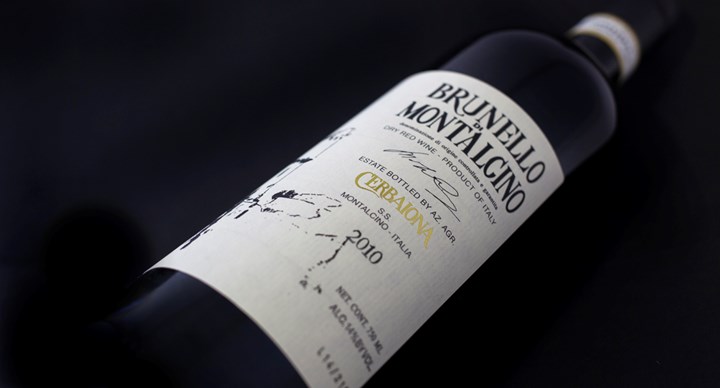
For the past two decades, the public’s idea of Brunello has increasingly been a modern wine, deeply colored, layered with oak, and delivering flavors not dissimilar to bold red wines from other regions and other countries.
But long before Modernism came to Montalcino, Brunello was second only to Barolo as Italy’s most revered wine precisely because it was unlike any other wine in the world—possessing a warm autumnal color, uniquely compelling forest-floor aromas and an opulent texture of pure velvet, unadorned by flavors of new wood.
“If forced to drink only one wine from Montalcino, I might very well choose Diego Molinari’s sumptuous Brunello.”
- Antonio Galloni
The more we taste Brunello, the more we understand that the wines most deserving of our reverence are those of a handful of classicists who have continued to make wines that respect Montalcino's most noble traditions. One of the very greatest of these was Diego Molinari, whose Cerbaiona Estate was one of the region's small jewels from the early 1980s until the property's sale in 2015.
Diego was an Alitalia pilot for 25 years before retiring in the late 1970s to pursue his winemaking dreams. He and his dynamic wife, Nora, looked at several vineyards before discovering the bucolic Cerbaiona estate, located on a ridge just east of Montalcino.
When he arrived, Molinari had an abundance of enthusiasm, but needed practical knowledge. So he visited many of the region’s top estates, asking questions and trying to find his way. Diego was particularly inspired by Biondi-Santi, whose traditionally driven philosophy he was determined to follow.
Consequently, he and Nora soon set about rehabilitating Cerbaiona’s ancient farmhouse and planting a small vineyard—not surprisingly, with vine cuttings from the Biondi-Santi estate.
Though Diego was adapting his practices in both the vineyard and cellar, he was steadfast in his commitment to honor Montalcino’s winemaking traditions—based on magical old bottles he’d tasted.
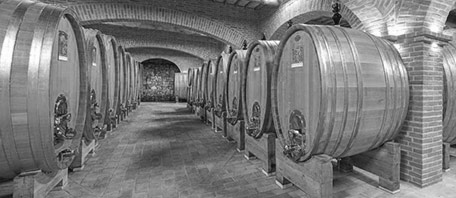
Winemaking at Cerbaiona is straightforward. The grapes are harvested by hand and pressed in a vintage wood-sided press before fermenting in cement tanks. After a period of settling, the Brunello spends 4+ years in cask and at least 6 months in bottle before release. Nothing is added (no yeasts, no enzymes) and nothing is subtracted (no fining or filtration).
With winemaking this straightforward, the explanation for the greatness of Diego's Brunello must lie with the tiny 3-ha vineyard. While much is written about the difference between northern and southern Montalcino wines, Cerbaiona lies in an intermediate zone. Consequently, the vineyard yields beautiful fruit which balances the south’s ripeness with the freshness and structure of the north.
Of course, none of this would matter without a forceful mind to guide the process. Diego’s careful, organic husbandry of his vineyard, his short-pruning for low yields, and his courage to let the wine express Montalcino’s evocative character without cosmetics are integral to the greatness of his iconic Brunello.
| Year | Description | Size | Notes | Avail/ Limit |
Price | |
|---|---|---|---|---|---|---|
| Please Call (415) 319-9000 for Availability | ||||||
New discoveries, rare bottles of extraordinary provenance, limited time offers delivered to your inbox weekly. Be the first to know.
Please Wait
Adding to Cart.
...Loading...
By clicking the retail or wholesale site button and/or using rarewineco.com you are choosing to accept our use of cookies to provide you the best possible web experience.