
Which site would you like to visit?
By clicking the retail or wholesale site button and/or using rarewineco.com you are choosing to accept our use of cookies to provide you the best possible web experience.
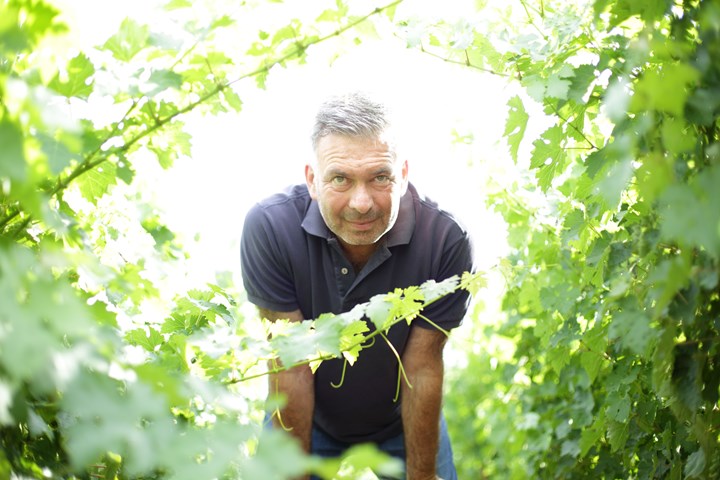
When Fabio Chiarelotto, a trained historian, purchased the Montepeloso estate in 1998, it was already well on its way to international stardom. While Chiarelotto could have rested on that reputation, he understood the estate was only beginning to reach its full potential.
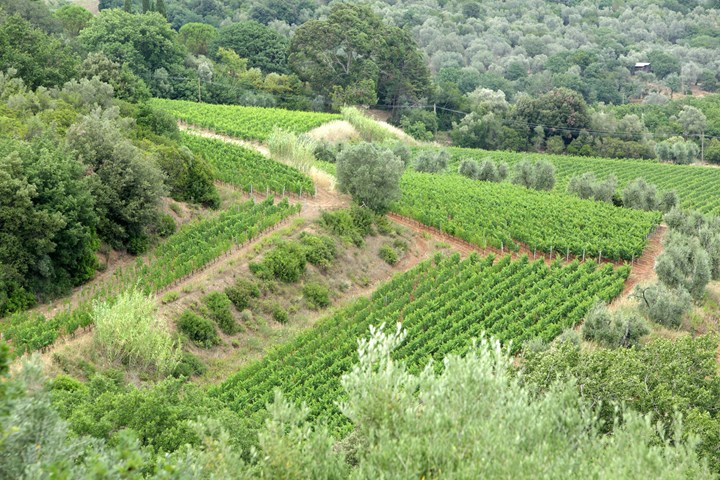
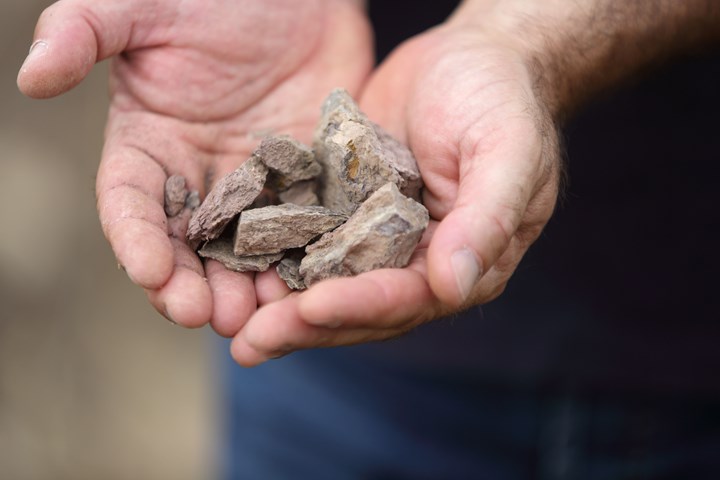
The winery draws from hillside vineyards around the town of Suvereto, just a few miles inland from the Tyrrhenian Sea. The region’s petrified clay soils, and its temperate, Mediterranean climate, give startling intensity of flavor to its wines. It’s little wonder that a half-dozen estates have sprung up there over the past 20 years.
Isolated from Central Tuscany by the Colline Metallifere, Suvereto shares just as much with France’s Provence as it does with Central Tuscany. The local vegetation is called macchia, a blend of evergreen shrubs and herbs very similar to Provence’s garrigue, and it lends an undeniable Mediterranean character to Montepeloso’s finished wines.
Chiarelotto began the first leg of his journey by painstakingly reshaping the estate’s vineyards. Foreign varieties were slowly replaced with local varieties and/or heritage clones that were more closely in tune with his vineyards. He focused on healthy cultivation of his vineyards, and finding a balance for the vines that would allow them to thrive in Suvereto’s warm, dry summers. With each vintage, he experimented with blends and techniques that would harness the region’s inherent power while skillfully tempering it to allow the terroir to fully express itself.
Chiarelotto’s obsession is such that we find few others with whom to compare him. But he perhaps reminds us most of the great Montalcino iconoclast Gianfranco Soldera. Like Soldera, Chiarelotto is driven by his own philosophies, possessing a fanatical commitment to quality, with an apparent disinterest in what others think of him or his wines.
While early progress was steady, the 2006 vintage marked the beginning of this estate’s “mature phase.” The vineyards were finally rehabilitated, and Fabio had settled on a mix of varieties that expressed the essence of Montepeloso—many of them varieties that the ancient Etruscans cultivated on these very hills. His experiments in winemaking and élévage had shown him the right balance for each wine. And, he had developed a profound understanding of his terroir and the direction each wine should take.
And Chiarelotto continues refining the wines to this day. He has slowly eliminated the once promising Montepulciano as warmer summers yielded increasingly dense wine, and he has sought freshness by planting new vineyards higher on the macchia-covered hillsides. His constant search for these subtle gains has led to wines that show a little more identity and refinement with each passing vintage. Today, Montepeloso’s wines rank among the most beautiful, profound, and expressive in Tuscany.
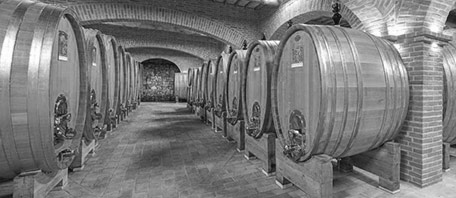
Eneo — The estate’s grand vin, Eneo is Fabio’s distillation of all that he’s learned. Aged in 2nd- and 3rd-year French barrique, it is a pure expression of the Costa Etruschi (Etruscan Coast). Over time, the blend has iterated to an assemblage of Sangiovese, Malvasia Nera, Cabernet Sauvignon, with a small percent of other local varieties.
Nardo — The ultimate expression of the Costa Etruschi’s native varieties, it is a super-selection of the estates oldest and best vines. It serves to epitomize the terroir of Montepeloso and is the kind of wine that’s almost impossible to describe. Fewer than 400 cases are made.
Gabbro — The great 100% Cabernet Sauvignon of Suvereto, Gabbro can compete with the world’s finest Cabs while boasting its distinctive Mediterranean terroir.
A Quo — First introduced with the 2008 vintage, A Quo is intended to be an affordable expression of the estate’s unique aesthetic. Blended from all the estate’s fruit, and raised in neutral wood, it’s a shocking bargain.
| Year | Description | Size | Notes | Avail/ Limit |
Price | |
|---|---|---|---|---|---|---|
 2024
2024
|
2024 Montepeloso A Quo |
AG92 / AF90 |
12 | $24.95 | add | |
|
2023
|
2023 Montepeloso Nardo |
AG95 / AF94+ |
12 | $84.95 | add |
New discoveries, rare bottles of extraordinary provenance, limited time offers delivered to your inbox weekly. Be the first to know.
Please Wait
Adding to Cart.
...Loading...
By clicking the retail or wholesale site button and/or using rarewineco.com you are choosing to accept our use of cookies to provide you the best possible web experience.